.avatarnew1-1f8b5757f526d280cfc13aefd9feb547406bb5e47cfba8a0bc3088214ab3bffc.png)
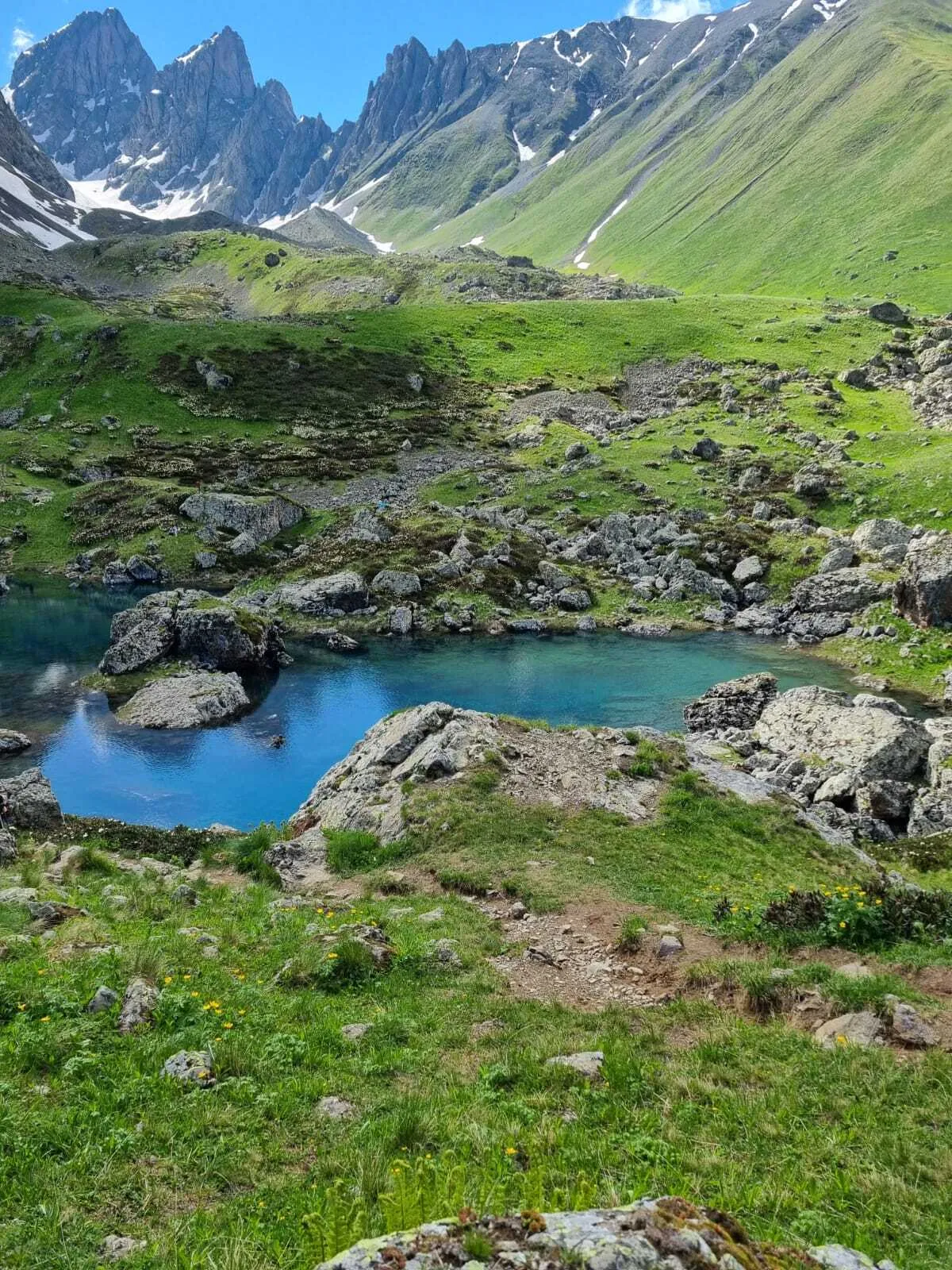
Every year in mid-June, the same scene plays out in the village of Juta.
A group sets off early in the morning on the Juta – Chaukhi Pass – Roshka route. Their goal is the colorful Abudelauri Lakes on the far side of the pass, the ones everyone has seen on Instagram. There was no snow in those photos. The trail from Juta is easy: alpine meadows, the jagged Chaukhi peaks ahead, and talk about how glad they are they didn't go to the crowded Alps.
Then the trail hits a wall. Below the pass (3,338 m, one of the highest and steepest trekking passes in Georgia), a steep slope of hard-packed snow lingers through June and sometimes into July. Without crampons, there's no way up. The group turns back, loses a day, and never reaches the lakes. That evening, a forum post appears: "Warn whoever comes after us."
This isn't a scare story. It's a pattern. Georgia's mountains run on their own calendar, and it rarely matches the vacation calendar.
The Mountain Calendar
- Chaukhi Pass. Usually passable without snow gear from July through September. The second half of June is a gamble that depends on how much snow the winter left behind.
- Tusheti. The only road in crosses the Abano Pass (2,850 m). It's cleared in late June, sometimes not until July. The real season runs from July to mid-September.
- Svaneti, Mestia – Ushguli trek. Snow lingers on the ~3,000 m passes until mid-June. After heavy rain, some sections become dangerous in any month.
- Kazbegi. Day hikes are often doable from May through October.
Dates shift every year, and snow can fall at altitude even in late August. The key takeaway: the widest hiking window runs from late June to late September. The best weather often comes not in the much-hyped July but in late August and September, when skies are clearer and the snow has melted off every pass.
What Was in the Packs of Those Who Made It
What usually separates those who crossed Chaukhi from those who turned back isn't experience. It's a few items that seem unnecessary until you need them.
Early season (June – early July):
- Crampons. On the snow slope below the pass, they're not optional. They're how you get through.
- Ice axe. Needed on steep, hard snow. On a regular trail, it's dead weight.
- Gaiters. Keep snow and mud out of your boots.
- Trekking poles. Give you stability on a slushy trail.
Crampons and an ice axe only help if you know how to use them. If you don't, go with a guide or choose later dates.
Peak season (July – early August):
- Rain poncho. Thunderstorms often build in the afternoon.
- Tent, stove, and gas. For nights at the lakes and on remote stretches of Tusheti and Svaneti with no guesthouses.
Late August – September:
- A sleeping bag rated below freezing. Days can be hot, but nights get sharply colder.
Any time:
- Headlamp.
- Warm layer. Snow can fall unexpectedly at altitude, even in summer.
Choose your sleeping bag's temperature rating based on the forecast for your dates and campsite elevation, not on averages.
No Need to Guess in Advance
You can pick up crampons the day before heading to Juta, when you already know what's happening on the pass right now, not what bloggers wrote a month ago.
Good Gear Means Less Weight on Your Shoulders
In the city, an extra kilo barely registers. But it becomes very noticeable at the airport when your bag is weighed, and in the mountains when you have to carry all of it on the trail.
Some items, like gas canisters, can't be taken on a plane at all.
Save space in your suitcase for tasty Georgian souvenirs, clothes from Georgian designers, or finds from the famous flea markets.
We carefully select our rental gear to be light, comfortable, reliable, and good-looking in the photos you bring home.
Because on a hike, every detail matters: your gear should help you enjoy the route, not become one more thing to deal with.
Don't Buy for a Few Days
Good hiking gear isn't cheap.
If you hike regularly, your own kit is a great investment. But if you're in Georgia for a week and planning one hike, buying a tent, sleeping bag, stove, and everything else suited to local conditions for just a few days may simply not make sense.
At Dewpoint, you can rent everything you need, with no buying, storing, or maintaining.
Don't Haul Gear Across Georgia
Why bring everything from home when you can pick up gear in Tbilisi before your hike and return it after?
Not planning to visit Tbilisi? No problem. We can send gear to Kutaisi, Mestia, or wherever you are.
Don't want to come back to Tbilisi after your hike? Or decided to spend the rest of your trip in a guesthouse instead of a tent?
Also no problem. Send back whatever you no longer need.
We try to fit our logistics to your trip, rather than make you change your route to return equipment.
Everything for Independent Travel
Dewpoint is more than hiking gear rental.
You can also rent a motorhome or 4x4 to explore Georgia on your own, and find ready-made routes, checklists, and gear lists.
No need to piece your trip together from dozens of different websites:
Route → checklist → transport → gear.
We help you prepare everything for your trip to Georgia in one place.
You come to Georgia for adventures, experiences, and good memories.
You don't need to bring an entire outdoor store with you, spend time hunting for gear, or figure out every detail on your own.
Leave that to us, and enjoy Georgia.
After all, there's a wonderful Georgian saying: a guest is a gift from God.